
Canadian Household Debt Is Concentrating in Mortgages
The comments below are an edited and abridged synopsis of an article by Better Dwelling
This article examines how Canadian Household Debt Mortgages are becoming increasingly interconnected as borrowing patterns continue shifting toward housing-related liabilities. While Canadians have long carried significant mortgage balances, recent data suggests an even greater concentration of household debt is now tied directly to real estate, creating financial vulnerabilities that may become increasingly important in a changing economic environment.
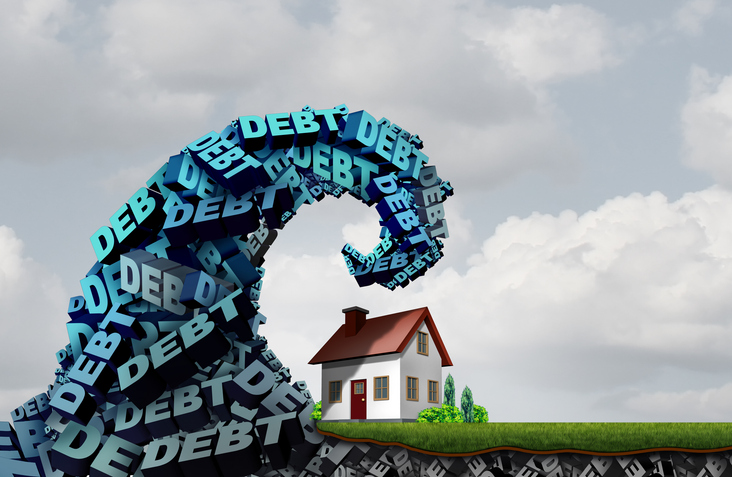
The article highlights how Canadian household debt continues climbing despite elevated borrowing costs and ongoing economic uncertainty. Mortgage borrowing remains the dominant contributor, even as housing market activity has cooled relative to previous years. Rather than consumer spending or unsecured lending driving debt growth, housing-related borrowing appears to be taking a larger share of total household liabilities. Statistics Canada data indicates that overall household debt growth has accelerated compared with pre-pandemic trends, with mortgage balances accounting for much of that expansion.
A central concern raised involves concentration risk. When a growing portion of household financial obligations becomes tied to housing, households become increasingly sensitive to interest rates, home prices, refinancing conditions, and employment stability. Mortgages can help households build wealth over time through homeownership and equity accumulation. However, higher leverage may also create financial stress when borrowing costs rise or economic conditions deteriorate. Statistics Canada research has noted that mortgage debt represents the majority of household liabilities nationally, reinforcing housing’s outsized role within Canadian household balance sheets.
The article argues that Canadian Household Debt Mortgages have become more concentrated even during periods of weaker housing sales activity. One explanation involves housing completions tied to earlier purchase commitments. Another possibility includes homeowners increasingly accessing home equity through refinancing or borrowing against property values. Rather than reflecting broad economic expansion, debt accumulation may increasingly stem from financial dependence on housing assets themselves.
The broader economic implications are significant. Canada already carries one of the highest household debt burdens among G7 nations. Elevated debt levels can reduce household financial flexibility, increase vulnerability to economic shocks, and place additional pressure on consumer spending when debt servicing costs rise. Mortgage renewals remain an important area of focus because households moving into higher-rate environments may experience larger payment obligations. Financial regulators have repeatedly highlighted household leverage and mortgage renewal risks as key stability concerns for Canada’s financial system.
The article does not suggest an immediate crisis but instead points toward structural trends that deserve attention. Housing remains deeply embedded within Canada’s economy and household wealth creation model. However, growing dependence on mortgage borrowing may reduce resilience if economic conditions weaken or financing becomes more restrictive.
Ultimately, Canadian Household Debt Mortgages reflect a broader story about Canada’s economic structure. Housing continues functioning as both a wealth-building mechanism and a source of growing financial exposure. As mortgage balances occupy an increasingly larger share of household liabilities, policymakers, financial institutions, and households themselves may need to consider what rising leverage means for long-term financial stability.