Global Economy ‘Yet to Feel The Pain’ from Tariffs, European Central Bank President Says
The comments below are an edited and abridged synopsis of an article by Politico
In a recent interview, Christine Lagarde, President of the European Central Bank (ECB), warned that the global economy has “yet to feel the pain” from the sweeping US tariffs introduced under Donald Trump. She noted that, for now, exporters and importers are absorbing cost pressures, but a tipping point may force consumers to carry the burden.
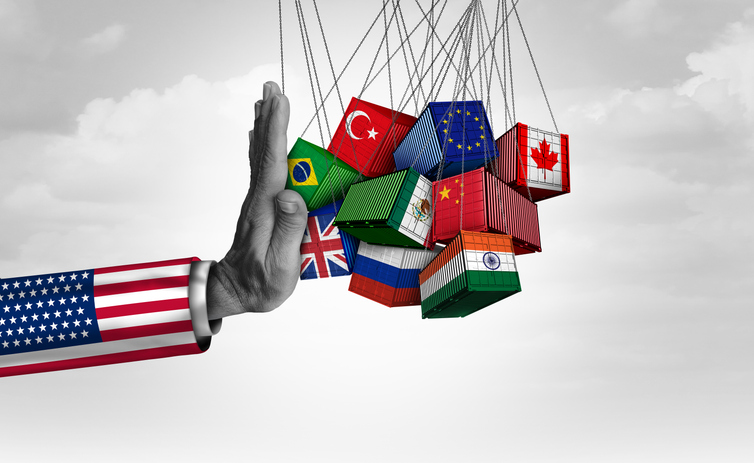
Her remarks shine a spotlight on how the global economy adapts to trade disruption and technological transformation. Lagarde identified two major structural forces at play: Tariffs reshaping trade flows, and artificial intelligence driving economic change. She also emphasised that the US–China trade standoff, while serious, often reflects standard negotiating postures rather than immediate breakdown; the broader shift lies in emerging geoeconomic dynamics.
What this means for Canada
For Canada, this analysis offers a cautionary tale. The global economy’s exposure to US tariffs underscores how interconnected trade and currency dynamics are, and how quickly Canada’s export-oriented economy could feel the effects. If the global economy eventually feels the pain, Canadian firms and policymakers need to be ready for ripple effects.
Canada should pay particular attention to:
- Margins first, consumers later: As Lagarde highlighted, many firms are pressing down on profit margins to absorb tariff costs. Once that’s no longer tenable, consumer prices rise and demand falls, a scenario that could impact Canadian households.
- Trade maps in flux: The global economy is undergoing structural change—alliances, supply chains and currencies are shifting. Canada will need to adapt to avoid getting caught in the crosscurrents.
- Technology and trade overlap: AI and other tech trends matter. As Lagarde noted, the global economy is being reshaped not just by tariffs, but by innovation. Canadian businesses that miss this dual shift may lag.
Why the global economy could still stumble
Despite limited immediate consequences, Lagarde warned of latent risk. Trade-policy uncertainty, exchange-rate shifts, and weaker-than-expected investment remain structural negatives. The ECB estimates that tariffs and related uncertainty may shave around 0.7 percentage points off euro-area growth between 2025 and 2027, a framework that Canada should watch closely.
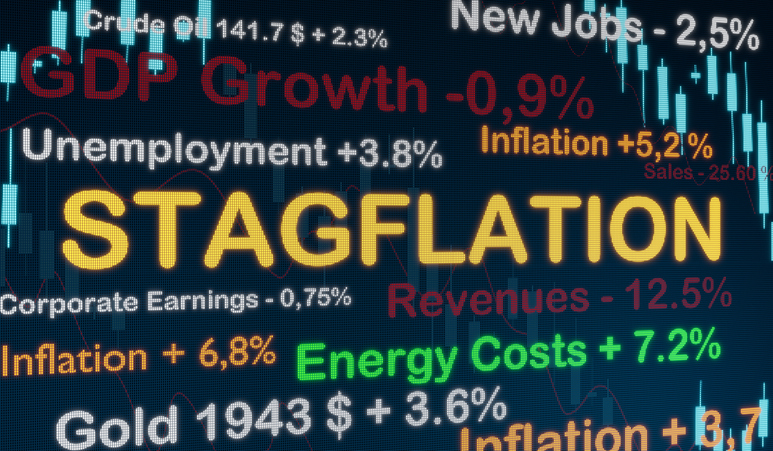
At the same time, the global economy’s resilience so far doesn’t equal immunity. Lagarde’s discussion hints that the real stress may be yet to come, particularly if Canada remains exposed to external shocks or is complacent in its own trade strategy.
Final word
In short, the global economy is in a holding pattern, a fragile calm before potential turbulence. For Canadian investors, exporters, and policymakers, the message is clear: Stay alert, diversify trade relationships, and build resilience. The cost of inaction may be delayed, but not avoided.